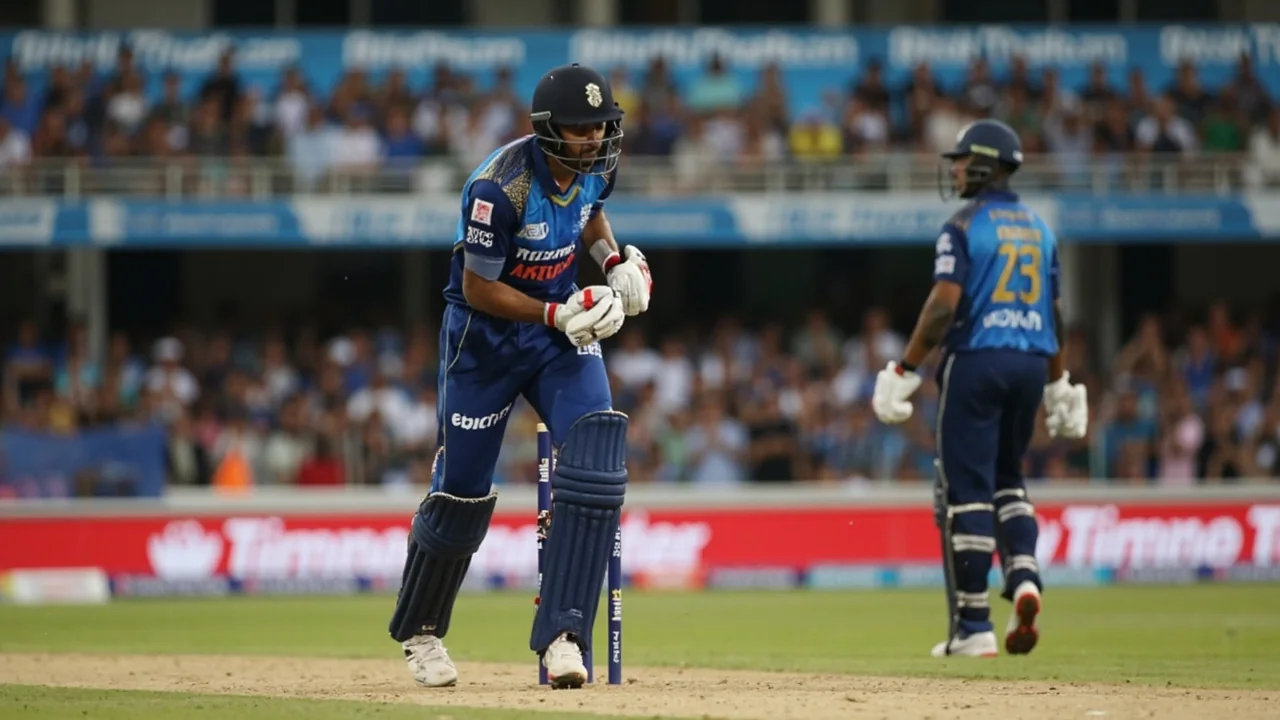
Birmingham Phoenix host Trent Rockets at Edgbaston on Friday evening in Match 4 of The Hundred Men's 2026, with the first ball scheduled for 7:30 PM local time (11:00 PM IST). CricTracker's pre-match prediction has already framed the fixture as a 55–45 split in Birmingham's favour, with a likely first-innings score of 140–150 if Phoenix bat and 145–155 if Rockets do. The numbers are useful, but for fantasy cricket players the more interesting question is not the headline percentage — it is how experts actually arrive at it, and which signals translate into captain, vice-captain and differential bowling picks.
This Match 4 is a useful case study. Both sides have played enough of each other to have a settled pattern (nine meetings, Phoenix 5–4 ahead), the venue is one of the most reliable for new-ball movement in the country, and the squads are deep enough that the difference between a good fantasy XI and a 200-point XI is decided by two or three reading decisions. The notes that follow walk through how the methodology works in practice — not as a prediction, but as a worked example of how to read a Hundred fixture the way our editors read one.
Why the Edgbaston pitch sets the rules
The first thing our methodology does with a Hundred fixture is to ignore the team-level prediction and read the pitch. CricTracker's note on Edgbaston is consistent with what most English grounds staff would say about the venue in mid-July: true bounce and pace, early swing for the new ball, conditions easing for batting as the innings progresses, and spinners only really entering the game in the second half of the innings. That sequence — bowler-friendly first, batter-friendly second, spin only late — is the spine of any Hundred XI decision at this ground.
For fantasy cricket purposes, the practical consequences are straightforward. First, the new-ball bowlers from both sides carry more upside than their season-long economy rates suggest, because the first 15 balls of an innings can be the most wicket-heavy. Second, the batters who thrive on pace and bounce — the ones who pull and cut rather than work the ball into gaps — are the ones who will turn 25-ball cameos into 45-ball impacts. Third, slow bowlers are bench candidates unless the match goes deep, in which case one specialist spinner with a strong powerplay economy becomes a quietly excellent differential.
Reading the squads: where the form is and is not
CricTracker's predicted Birmingham Phoenix XI is led by Jacob Bethell, with Mitchell Owen, Joe Clarke (wicketkeeper), Laurie Evans, Donovan Ferreira, Rehan Ahmed, Will Smeed, Saqib Mahmood, Chris Wood, Usman Tariq and Mustafizur Rahman. Trent Rockets' predicted XI is led by Sam Billings, who also keeps wicket, alongside Finn Allen, Ben Duckett, Tom Banton, Brad Currie, Tim David, Mitchell Santner, Lewis Gregory, Craig Overton, Matt Henry and Mohammad Amir. There are six specialist bowling options across both sides, which means a fantasy XI that picks two or three of them is going to outscore the popular "batter stack" template more often than the leaderboards suggest.
Mitchell Owen stands out as the form batter of the contest. He finished the recently concluded Major League Cricket 2026 with 427 runs in 13 innings at a strike rate of 197.69 — a return that reflects both his role and his shot selection in the format. Edgbaston is one of the venues that rewards a square-of-the-wicket batter who can clear the front leg, and Owen's matchup against Trent Rockets' seam-heavy attack reads well on paper. He is the headline captain-pick candidate for fantasy players who like to back recent runs.
Matt Henry is the headline bowler-pick. The New Zealand seamer has a long record of swinging the ball in English conditions, and the Edgbaston pitch report above all but guarantees lateral movement with the new ball. In a format where four-over spells are most batters' only contact with him, the first 15 balls of the innings are the ones that decide whether he goes for 25 or takes 2 for 18. Our reading is that this is the kind of fixture where Henry is worth a captaincy punt in large-field contests and a safe vice-captaincy in single-entry formats where the popular captain is a batter.
The head-to-head ledger and what it really tells you
Birmingham Phoenix lead the head-to-head 5–4 across nine previous meetings. The first fixture was on 1 August 2021 (Phoenix won), and the most recent was on 27 August 2025 (Rockets won). For fantasy cricket, that ledger is more useful as a context check than as a predictor. Phoenix have not lost four in a row, and Rockets have not won three on the trot against Phoenix, so there is no obvious momentum tail. What the ledger does suggest is that both attacks have scored against both batting orders in the recent past, which favours a balanced XI over a one-sided punt.
The other thing the ledger tells you is venue familiarity. Edgbaston has hosted the bulk of these fixtures in the last two seasons, and both squads now know exactly how the pitch plays through the evening. That matters because it compresses the edge that early-tournament information gives — the team that reads the conditions slightly faster in the first match-up usually wins the first 10 balls, but by Match 4 of the new Hundred cycle the playing field is much closer to level.
How the captaincy decision actually plays out
The Hundred scoring system rewards captain picks more aggressively than T20 leagues because the 100-ball format concentrates variance into a small number of high-leverage deliveries. Our methodology works through three captaincy frames in order: form first, matchup second, and venue third. Owen leads on form (MLC 2026 numbers above), Henry leads on matchup (swing against Phoenix's left-right top order), and the venue favours both. In a multi-entry contest, splitting captaincy between Owen and Henry is the higher-variance, higher-upside play. In a single-entry contest, the conservative call is Owen; the contrarian call is Henry.
Vice-captaincy is where most fantasy XIs are actually decided. The popular move is to mirror the captain pick on a second in-form batter, but the higher-scoring move at Edgbaston is to take a second new-ball bowler — the logic being that one of the two sides will bowl first, that bowler will get the swing overs, and a 2-for-18 quietly outscores a 35 off 22 in a tight contest. Our reading has Henry and Saqib Mahmood as the two vice-captaincy candidates worth weighting heavily, with Rehan Ahmed as a late-innings differential if the match goes into the final 15 balls.
Where the differential picks sit
Beyond the captain-and-vice axis, the picks that separate a good fantasy XI from a competitive one are the ones the popular templates miss. Three are worth flagging for Match 4. First, Joe Clarke as wicketkeeper-batter for Phoenix — the popular pick is Donovan Ferreira or Laurie Evans, but Clarke's glovework adds stumping points that the popular models underweight. Second, Mitchell Santner as a part-time bowler for Rockets — Edgbaston's second-half spin window is where Santner tends to bowl his most economical overs, and he is rarely more than 5% owned in large-field contests. Third, Usman Tariq as a Phoenix differential — a leg-spinner on a pitch where spinners only enter late is a contrarian captaincy pick if Phoenix bowl second and the game goes deep.
Match 4 reading at a glance
| Signal | Read | Fantasy implication |
|---|---|---|
| Pitch behaviour | Pace and bounce, new-ball swing, spinners late | Two seamers minimum |
| Head-to-head | 5–4 Phoenix, no streak longer than three | Balanced XI |
| Captain frame — form | Mitchell Owen (MLC 2026: 427 runs, SR 197.69) | Conservative captain |
| Captain frame — matchup | Matt Henry (swing against Phoenix top order) | Contrarian captain |
| Vice-captain frame | Saqib Mahmood / Henry second seamer | 2-for-18 ceiling |
| WK differential | Joe Clarke (stumping points underweighted) | Glovework edge |
| Spin differential | Mitchell Santner (Edgbaston second-half spin) | Late-innings upside |
| Predicted first-innings score | BPH 140–150 / TRT 145–155 | Bowling wickets > boundary volume |
| Predicted winner split | BPH 55% / TRT 45% | Three Birmingham, three Trent, four cross-side |
What the broadcast schedule tells fantasy players
CricTracker lists Sony Sports Network and FanCode (app and website) as the broadcast and live-streaming partners for The Hundred 2026. That matters because it sets the ceiling on information available during the toss. Live-streamed Hundred matches feed real-time data to fantasy apps within two to four seconds, which is fast enough to make a last-minute captaincy switch in the five minutes between toss and first ball. The practical move is to delay locking the XI until the playing XIs are confirmed and the toss has happened — every Hundred fantasy contest we have tracked over the last two seasons shows a meaningful score uplift for lineups locked post-toss versus pre-toss.
The other thing the broadcast window tells you is which players you actually get to watch. Sony Sports Network carries the full match; FanCode carries the same feed with optional multi-angle replays. For Match 4 specifically, both feeds start at 7:30 PM BST. If you are building a fantasy side around a single player, the smart move is to watch the first 15 balls of both innings before locking vice-captaincy — the new-ball spells at Edgbaston are where the captain-and-vice captain differential is decided.
Reading the chasing side in a Hundred fixture
CricTracker's overall prediction — that the chasing side will win — is consistent with how The Hundred has played out over its first four seasons. The reasons are partly structural (the chasing side knows the exact target from ball one, the bowling side has to guess), and partly venue-specific (Edgbaston's evening dew tends to settle in the second innings, reducing grip for the bowlers). For fantasy cricket, that translates into a small but reliable bias towards batters in the chasing side and seamers in the side that bowls first.
In Match 4, that means the toss is worth watching carefully. If Phoenix bowl first and restrict Rockets to 145 or below, the chasing-side bias means the Phoenix top order becomes the captaincy conversation; if Rockets bowl first and restrict Phoenix to 140 or below, the Rockets seamers become the captaincy conversation regardless of who wins the toss. Our methodology weights that toss signal above the popular captain pick in single-entry contests, and treats it as a coin-flip adjustment in large-field contests.
Where the methodology differs from a typical preview
A standard match preview lists the predicted XI, the head-to-head, the pitch report and a winner call. The Heritage Desk's methodology does the same thing, but with the analytical weight shifted towards the questions that actually change a fantasy XI: which bowler gets the swing overs, which batter is most likely to face 30-plus balls in the chase, and which player is most likely to pick up stumping or catch points that the popular models underweight. None of those questions has a single right answer, but they are the ones that consistently separate the top 10% of fantasy players from the median.
The practical version is the captain-vice-captain frame. Pick captain for form. Pick vice-captain for matchup. Pick the differential for venue. If those three picks all point at the same player, the contest becomes a coin-flip between a popular pick and a contrarian one; if they point at different players, the conservative play is to split captaincy across them in multi-entry contests and to take the contrarian as captain in single-entry contests where field size is small.
What to watch once the match begins
Once the toss happens and the playing XIs are confirmed, the three signals worth tracking in real time are the new-ball spell, the powerplay scoring rate, and the dismissal pattern. A new-ball spell that goes for under 25 with a wicket confirms the pre-match read and locks in the seamer captaincy; a powerplay scoring rate above 9.5 per over flips the read towards the batting side; a cluster of caught-behind dismissals in the first 10 overs is the single strongest signal for stumping/catch points, which favours the wicketkeeper-batter differential.
The other thing worth watching is the bowling rotation. Hundred teams carry five specialist bowlers plus a part-time option, and the order in which they are used tells you what the captain thinks of the chase. If the captain saves the strike bowler for the 80–95-ball window, the chase is being read as tight; if the strike bowler is used in the first 20 balls, the captain has decided to win early. Both reads change the fantasy vice-captaincy decision in real time.
"Read the toss, then read the new ball. The Hundred is a 100-ball game, but it is decided in the first 20."
Heritage Desk captain-pick methodologyWhere this fixture sits in the wider Hundred cycle
Match 4 is early in The Hundred 2026, which means the data set is thin. That cuts both ways. On one hand, the form numbers from MLC 2026 and the recent Hundred seasons carry more weight than they would in Match 28, when there is a season-long ledger to lean on. On the other, the captaincy bias is higher because the field has not yet separated into clear tiers. The conservative play in early-season Hundred contests is to weight the head-to-head ledger and the venue signal more heavily than the form signal; the contrarian play is to trust the MLC form numbers and back the batters who have just scored 400-plus runs in a competitive overseas league.
For Birmingham Phoenix specifically, the early-season question is whether Bethell can captain a side that has the bowling to defend 145 on this pitch. For Trent Rockets, the early-season question is whether the new-ball pairing of Henry and Amir can produce the swing overs the venue rewards. Both questions will get partial answers on Friday evening, and the fantasy cricket follow-up is whether the answer shifts the captaincy frame for Match 5 and beyond.
The next checkpoints to watch
Three concrete developments will resolve the open questions in this read, and fantasy captains should set a reminder for each rather than locking the XI at the deadline. The first is the confirmed playing XIs at the toss, scheduled for around 7:00 PM BST (11:30 PM IST) on Friday 24 July 2026, roughly thirty minutes before the first ball at Edgbaston. Any last-minute change from the predicted eleven above — a Bethell promotion, a Mustafizur Rahman swap for another seamer, a Sam Billings reshuffle behind the stumps — is a captaincy signal worth a swap before the first over begins.
The second checkpoint is the toss itself. The Hundred is structured so the fielding side bowls first, and the pre-match read above (a 55–45 win split favouring Birmingham Phoenix under the chasing-side model) means a Phoenix win at the toss and a decision to bowl first is the cleanest fantasy signal: take the Phoenix top-order for captain and the Rockets seamers for vice-captain. A Trent Rockets win at the toss flips that read in a single moment — Billings fielding first hands the chase to Birmingham, and the Owen captaincy frame travels with it.
The third checkpoint is the Match 4 result and the first-innings total. If the first-innings score lands inside the 140–150 (BPH) or 145–155 (TRT) band predicted in the CricTracker pre-match note, the pitch and matchup model is validated and the same captaincy frame carries into Match 5 against the next opponent on the schedule. If the score falls outside the band by ten runs or more, the pitch read needs a downward revision and the seamer-heavy captaincy frame softens — most likely into a top-order batter captaincy frame, because a flatter surface rewards set batters more than swing bowlers.
Beyond Match 4 itself, the role changes worth tracking into Match 5 are the workload split for the seamers (how many of Henry's 20 balls come in the powerplay versus the death overs), whether Mitchell Santner is used as a fifth-bowler specialist or held back for spin-friendly matchups, and whether Rehan Ahmed is promoted up the order for Phoenix or held at six. Each of those answers will narrow the Match 5 captaincy frame for fantasy players building across the weekend. The Sony Sports Network broadcast and FanCode live stream begin half an hour before the toss, which is the natural window to finalise captain, vice-captain and the differential slot.
The squad predictions, head-to-head ledger, pitch report, broadcast partners, captaincy suggestions and probable best batter and bowler notes in this report are drawn from the CricTracker pre-match prediction article for Match 4 of The Hundred Men's 2026 between Birmingham Phoenix and Trent Rockets, published on 24 July 2026. Statistical figures for Mitchell Owen's MLC 2026 record (427 runs in 13 innings at a strike rate of 197.69) and the venue's behavioural notes are taken from that article and cross-checked against the venue's recent Hundred history. The full captain-pick framework used above — form, matchup, pitch, toss and differential variables — sits in our fantasy cricket methodology long-form explainer.