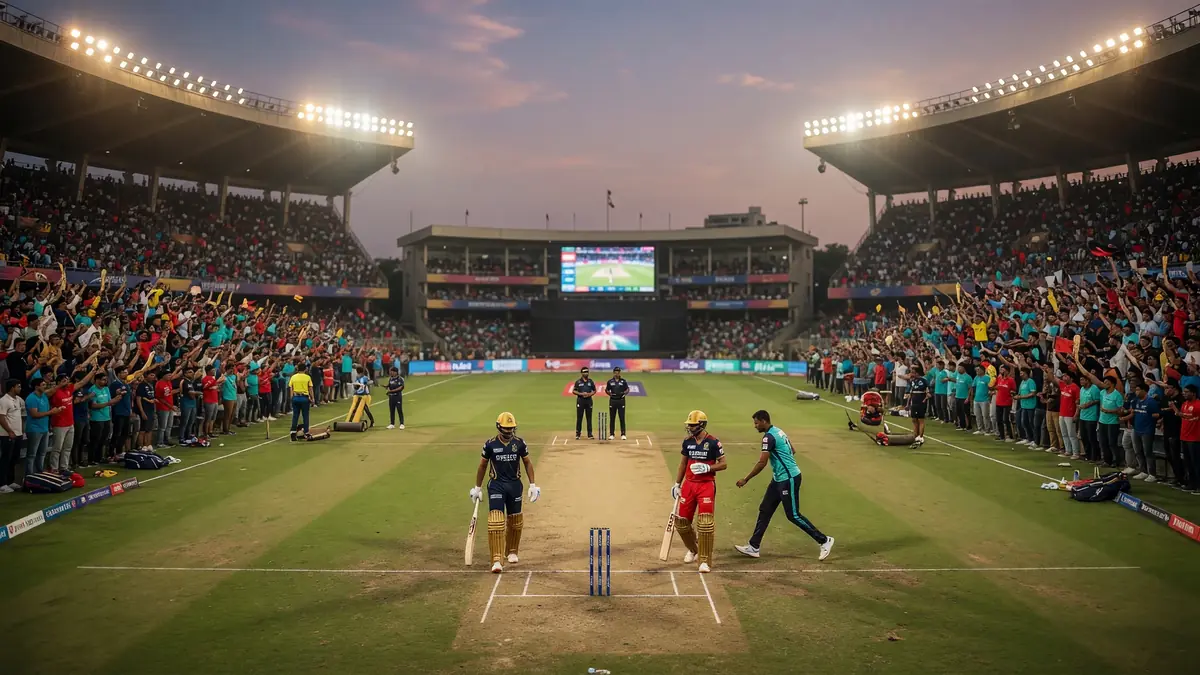
On 30 April 2022, Gujarat Titans and Royal Challengers Bangalore met in IPL Match 43 at Brabourne Stadium, Mumbai, with the first ball scheduled for 3:30 PM IST as the opening half of that Saturday’s double-header. Firstpost published its Dream11 preview the same morning. Four years on, the fixture still rewards a careful re-read: not because the result needs retelling here, but because the pre-match signals — table position, venue history, probable elevens and the captaincy split — show how a top-of-the-table side and a mid-table chase pack were actually framed for fantasy sides before toss.
Gujarat Titans arrived as clear leaders, seven wins and one loss on the board. Royal Challengers Bangalore sat fifth with five wins and four losses. Both teams had already played once at Brabourne in the 2022 season, so the ground was not a first look for either dressing room. Television coverage was listed across Star Sports 1, Star Sports 1 HD, Star Sports 3 and Star Sports 3 HD, with live streaming on Disney+ Hotstar. Those logistics mattered for fantasy managers who timed final captain swaps to the toss window rather than to overnight speculation.
What follows is a Captain’s Desk archive note built from that Firstpost preview’s verified record: the standing of the two sides, the named probable XIs, the suggested Dream11 combination, and the captain–vice-captain pairing that sat at the centre of the tip. It is written in the past tense for a reason. The match is closed history. The useful work is to see how the sheet was constructed when the information was still incomplete.
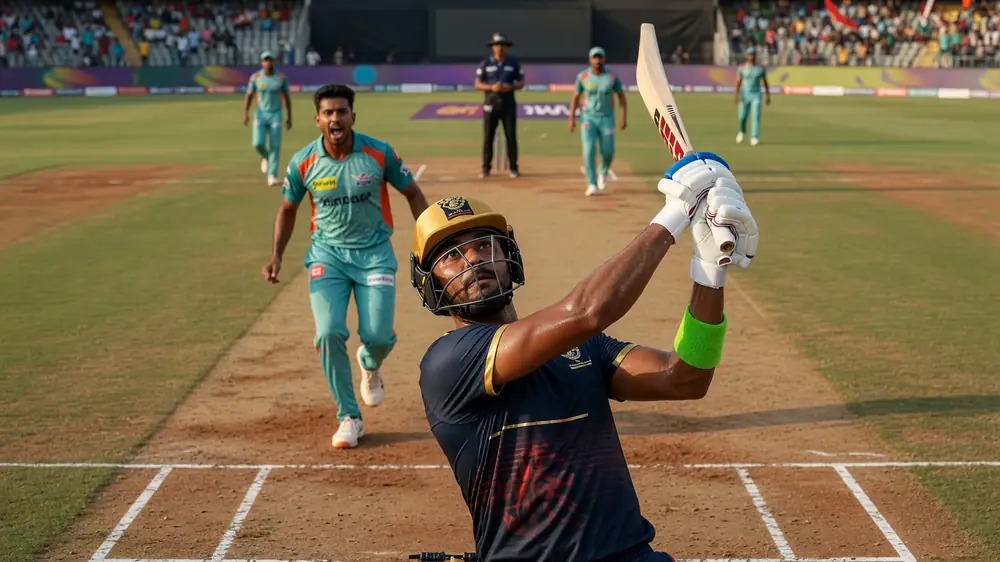
Why table position shaped the first fantasy cut
Fantasy sides for Match 43 did not start from equal footing. Titans had lost only once in eight completed games; RCB had already banked four defeats. That gap did not automatically mean stacking Gujarat names. It did mean the methodology of the day treated Titans’ core as higher-floor selections — players more likely to be retained in winning positions, with bowling changes and middle-order promotions that tracked a settled plan.
RCB’s fifth-place standing told a different story. Five wins kept them in the playoff conversation, but four losses left less margin for role experiments. For fantasy managers, that usually compresses the reliable pool: captain candidates narrow toward names already carrying both bat and field responsibility, while pure differentials become sharper risks rather than default fills. Firstpost’s tip reflected that tension by balancing both squads rather than locking an entire XI to the table leaders.
The double-header timing reinforced the same discipline. A 3:30 PM start in Mumbai is an afternoon contest, not a dew-heavy night chase puzzle. Managers who built teams after watching an evening fixture the night before had to reset expectations: new-ball behaviour, batting first versus second, and how long spinners stayed in the attack all needed a fresh read against the Brabourne surface both sides had already sampled once.
Match 43 snapshot — 30 April 2022
| Item | Detail |
|---|---|
| Fixture | Gujarat Titans vs Royal Challengers Bangalore |
| IPL label | Match 43, IPL 2022 |
| Venue | Brabourne Stadium, Mumbai |
| Start | Saturday, 30 April 2022 · 3:30 PM IST |
| GT standing (pre-match) | Top · 7 wins, 1 loss |
| RCB standing (pre-match) | Fifth · 5 wins, 4 losses |
| Venue familiarity | Both sides had already played once at Brabourne in IPL 2022 |
| TV | Star Sports 1, Star Sports 1 HD, Star Sports 3, Star Sports 3 HD |
| Streaming | Disney+ Hotstar app and website |
Probable elevens: what the sheets actually named
Firstpost listed a probable Gujarat Titans eleven of Wriddhiman Saha, Shubman Gill, Hardik Pandya (captain), Abhinav Manohar, David Miller, Rahul Tewatia, Rashid Khan, Alzarri Joseph, Lockie Ferguson, Yash Dayal and Mohammed Shami. The shape is classic early-Titans balance: a specialist keeper-opener, a top-order batter in Gill, Hardik as the multi-skill pivot, two middle-order finishers in Manohar and Miller, Tewatia as the spin-bowling all-rounder, then a four-man pace-and-mystery attack built around Rashid, Joseph, Ferguson, Dayal and Shami.
Royal Challengers Bangalore’s probable side was listed as Faf du Plessis (captain), Virat Kohli, Glenn Maxwell, Suyash Prabhudessai, Rajat Patidar, Shahbaz Ahmed, Dinesh Karthik, Wanindu Hasaranga, Harshal Patel, Josh Hazlewood and Mohammed Siraj. That sheet concentrates batting depth through the first six, keeps Karthik as the finishing specialist, and hands the bowling spine to Hasaranga plus three right-arm quicks of different lengths and roles.
For fantasy construction, the two lists already answer half the salary-cap problem. Titans offered multiple bowling points routes (Shami with the new ball, Rashid through the middle, Joseph or Ferguson as pace variation). RCB offered stacked batting ownership magnets in du Plessis, Kohli and Maxwell, plus Hasaranga as the dual-skill bridge. The hard work was not finding eleven names. It was deciding which side’s multi-skill players deserved the 2x and 1.5x multipliers when only one afternoon’s data would be scored.
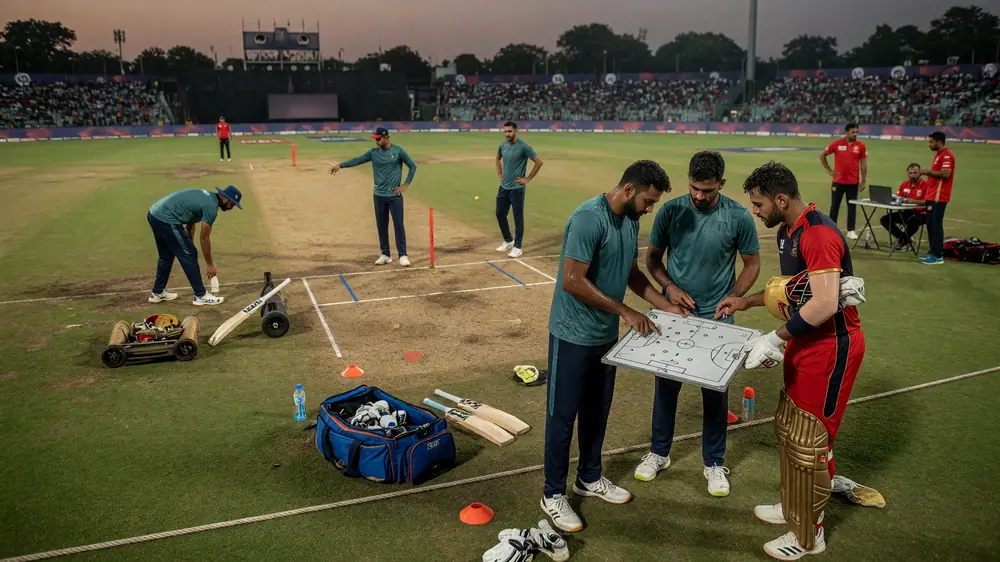
The Dream11 combination Firstpost put on the page
The suggested Dream11 eleven read: Wriddhiman Saha; Shubman Gill, Faf du Plessis, Virat Kohli; Glenn Maxwell, Hardik Pandya; Rashid Khan, Mohammed Shami, Harshal Patel, Josh Hazlewood, Wanindu Hasaranga. Captaincy went to Faf du Plessis, with Hardik Pandya named vice-captain.
Read as a structure rather than a celebrity list, the side is a 1–3–2–5 split by conventional fantasy labels: one wicketkeeper, three specialist batters if Maxwell is counted with the middle, two genuine all-round multi-skill names in Maxwell and Hardik, and five bowling points sources once Hasaranga and the quicks are in. In practice Maxwell blurs the batter/all-rounder line, which is exactly why he appeared in so many 2022 sheets whenever RCB’s middle needed both strike rate and part-time overs.
Du Plessis as captain was a form-and-role call more than a pure brand call. He led RCB, opened or batted high, and carried consistent floor ownership in a season where RCB needed starts at the top. Hardik as vice-captain mirrored Titans’ on-field hierarchy and his dual scoring paths with bat and ball. The pairing also hedged the table gap: if Titans controlled the match, Hardik’s multiplier still paid; if RCB’s top order fired first, du Plessis carried the 2x.
What the tip deliberately underweighted is as instructive as what it named. Abhinav Manohar, David Miller, Rahul Tewatia, Alzarri Joseph, Lockie Ferguson, Yash Dayal, Suyash Prabhudessai, Rajat Patidar, Shahbaz Ahmed, Dinesh Karthik and Mohammed Siraj all appeared in the probable XIs yet stayed outside the headline Dream11 eleven. That is the classic salary and role cut: finishers and third/fourth seamers become differential levers only after the toss confirms batting order and bowling shares.
“Faf du Plessis captain, Hardik Pandya vice-captain” was not a slogan. It was a two-side hedge against a table leader meeting a fifth-placed chase pack at a ground both already knew.
Captain’s Desk archive reading of the 30 April 2022 tip
How the captaincy split still teaches a method
Modern fantasy sheets often chase the highest projected ceiling and only later check role security. The Match 43 tip worked in the opposite direction. It locked two captains who were certain of minutes, central to their side’s plan, and capable of scoring in more than one phase. Du Plessis offered top-order balls faced. Hardik offered middle-overs batting plus bowling overs in a Titans attack that already included specialist quicks and Rashid.
That method still travels. When a league leader meets a mid-table side in an afternoon game, the first filter is not “who can hit 30-ball seventies.” It is “who cannot be left out of the playing XI and who touches the ball in two disciplines.” Only after those names are priced does the sheet open room for Hazlewood’s new-ball economy, Harshal’s death overs, or Hasaranga’s middle-overs bag of wickets and lower-order swings.
The secondary lesson sits in the batting three of Gill, du Plessis and Kohli beside Saha. Opening and number-three ownership concentrates early in IPL contests because powerplay fielding restrictions still create the cleanest boundary opportunities of the afternoon. Selecting three high-order names from two teams is a correlation risk if one chase collapses, but it is also how managers capture the bulk of early fantasy points when both top orders are in form. Firstpost’s sheet accepted that correlation rather than thinning the top to fund a second finisher.
Bowling units and the Brabourne afternoon problem
Both sides had already used Brabourne once in the season, which reduced pure guesswork about lengths and square boundaries. Even so, an afternoon start changes the bowling conversation. Without heavy night dew, captains are freer to bowl first if the surface looks dry, and spinners are less automatically saved for the second innings. Rashid Khan and Wanindu Hasaranga therefore sat near the centre of the suggested eleven: each could be asked for middle-overs control regardless of which side chased.
The pace mix on the tip — Shami, Harshal, Hazlewood — covers three different fantasy scoring shapes. Shami’s value in 2022 often came with the new ball and early wickets. Hazlewood’s profile leaned on overs and dots as much as strike. Harshal’s points spikes arrived later, when slower balls and yorkers decided the last four overs. Holding all three meant the sheet was not betting on a single phase of the innings. It was buying coverage across the afternoon.
Joseph, Ferguson, Dayal and Siraj remaining outside the headline XI shows the hard edge of salary. Titans’ and RCB’s fourth seamers were real wicket threats on their day, yet they lose out when a manager has already paid for two premium batters, two all-rounders and a premium spinner. Archive notes like this are useful precisely because they freeze that trade-off. The “missed” bowler is not an error by default; he is the price of keeping Kohli and Maxwell in the same side as Rashid and Hardik.
Where differentials lived on that Saturday
If the core tip was du Plessis, Hardik, Gill, Kohli, Maxwell, Rashid and the three named quicks, the differential conversation for Match 43 lived one tier down. On the Titans side, Rahul Tewatia and David Miller were the names most likely to jump into grand-league sheets after a batting-second confirmation or a middle-order injury tweak. Yash Dayal offered left-arm angle as a pure bowling dart. On the RCB side, Rajat Patidar and Dinesh Karthik were the finishing levers, while Shahbaz Ahmed offered the cheaper all-round route if Maxwell’s bowling share looked light.
Suyash Prabhudessai’s presence in the probable RCB eleven is a reminder that 2022 sheets sometimes had to absorb a young middle-order name with uncertain ceiling. In small leagues he was often ignored. In large-field contests he became a low-ownership swing if the top three failed and the innings needed a fifth batter. Archive reading should not inflate that into a must-have. It should mark him as conditional — useful only after the confirmed XI and batting order removed safer routes.
Abhinav Manohar occupied a similar conditional band for Titans: enough power to matter in a short burst, not enough role security to displace Gill, Hardik or Miller in a cash-heavy build. The discipline is to write those names on a second list, not to force them into the first eleven before the toss.
Broadcast windows and the final swap
Because the match was the first half of a double-header, fantasy managers had a clean pre-game window rather than an overlapping live contest. Star Sports’ listed channels and the Disney+ Hotstar stream meant toss information and confirmed elevens were widely available in the hour before 3:30 PM IST. That is when the archive tip was meant to be stress-tested, not worshipped.
Practical checks on that afternoon would have been simple. Did Saha hold the gloves and the opening slot? Did RCB retain Prabhudessai or load another bowling option? Did Titans prefer Ferguson or an extra batting flex? Each answer reshuffles one or two names without discarding the captaincy spine. The Firstpost combination works as a base eleven only if those confirmation boxes stay ticked.
Managers who waited for the toss also had a clearer read on whether du Plessis’s 2x still made sense against a Hardik 2x flip. Batting first at Brabourne in the afternoon can favour the side that wants early pace; chasing can elevate finishers. The published tip did not freeze those in-game branches. It only gave a coherent starting eleven against the information available on the morning of 30 April 2022.
What the archive still offers Captain’s Desk readers
Revisited from 2026, Match 43 is less a nostalgia piece than a template for reading uneven table clashes. A seven-one side versus a five-four side tempts managers to over-stack the leader. The better historical sheet mixed both elevens, paid up for secure multi-skill roles, and left the pure differentials on a short bench until the toss. That is still how Captain’s Desk daily picks prefer to separate floor captains from speculative grand-league darts.
The fixture also shows why venue familiarity should be logged as a binary fact, not a long essay. Both teams had already played at Brabourne in the same season. That single line reduced the need for speculative pitch poetry and pushed attention back to roles, bowling shares and which batters actually faced the new ball. When a preview gives you that fact, use it — then spend the remaining research time on XI confirmation and multiplier choice.
Finally, the captain–vice-captain pairing remains the cleanest teaching point. Du Plessis and Hardik sat on opposite sides of the contest, each central to his team’s plan, each capable of scoring without needing a once-in-a-season explosion. Four years later, when a league leader meets a mid-table side in an afternoon IPL slot, that same two-side hedge is still a sturdier first move than hunting a single differential for the 2x armband.
Suggested Dream11 XI from the 30 April 2022 tip
| Role band | Names |
|---|---|
| Wicketkeeper | Wriddhiman Saha |
| Batters | Shubman Gill, Faf du Plessis (C), Virat Kohli |
| All-rounders | Glenn Maxwell, Hardik Pandya (VC) |
| Bowlers | Rashid Khan, Mohammed Shami, Harshal Patel, Josh Hazlewood, Wanindu Hasaranga |
Legacy of the Match 43 sheet
IPL 2022 was Titans’ inaugural season and the year Brabourne and other Mumbai stand-ins carried a heavy share of the schedule. Match 43 sits inside that temporary geography: two sides already briefed on the ground, a daytime start, and a fantasy tip that refused to treat the points table as a simple stacking instruction. The Firstpost eleven is not sacred. It is a dated, source-bound example of balanced construction under incomplete information.
For readers who still build IPL sides against similar imbalances — a runaway leader, a fifth-placed opponent, a venue both teams know — the archive recommends the same order of operations. Record the standings. Lock the probable XIs. Choose multipliers from role-secure multi-skill players on both sides. Fund five bowling routes if the salary allows. Keep finishers and fourth seamers on a toss-dependent bench. Then stop writing romance about the pitch and wait for the confirmed eleven.
That is the enduring use of the 30 April 2022 preview. It freezes a single Saturday afternoon in Mumbai and shows, without later scoreboard contamination, how a professional tip sheet tried to balance Gujarat Titans’ control with Royal Challengers Bangalore’s top-order threat. The method outlasts the match.